Showing posts with label Reformation. Show all posts

Saturday, October 31, 2015

The English Protectorate

Civil wars have a funny way of producing victors who do not resemble the original combatants. If you are an American, the US Civil War provides an excellent example.

Many people mistakenly think that "the North" won that war. The truth is, however, that the Union won that war and it was an entity which did not really exist prior to the conflict. The beliefs an goals of the victors, in 1865, were not the same as those of the men who began fighting for the North in 1861. A new nation, with a new interpretation of its founding documents, had been born from the strife and the destruction of war.

A similar transformation happened due to the English Civil War. When the victors, through their legislative tool known as the Rump Parliament, could not govern England, Wales, Ireland and Scotland, power was put into the hands of a Lord Protector.


This result only came about because Oliver Cromwell marched into the ineffective assembly of the Rump Parliament in 1653 and dissolved it. Afterward, he ordered the Congregationalist churches to send representatives to form a new governing body that became known as the Assembly of Saints. When this body also failed to manage the affairs of government for the sprawling Commonwealth. it too was dissolved. In December of 1653, a new constitution was proposed as was the radical idea of making Oliver Cromwell Lord Protector for life. As he was head of the most powerful military body in the land, this nomination was easy for him to confirm.

The Protectorate Under Oliver Cromwell

The form of government varied in appearance during the reign of Oliver Cromwell. However, the fact of his rule never really changed. There were parliaments called and bodies of major generals consulted but Cromwell always had his way. He dissolved the parliaments and ignored the generals when it suited him.

Nevertheless, Cromwell maintained order and defended the nation's borders during his rule. In fact, he even added to the nation's colonies with an invasion of Jamaica, which was a Spanish colony at the time.

The English elite were so impressed with Cromwell that they offered him the crown in 1657. Now things had come full circle in deed as well as in appearance. Cromwell, who had fought against the idea of monarchy, actually refused the offer. He stated that he "would not build Jericho again." However, his rule was stronger than that of almost any king in the world at that time.

Notwithstanding this protest, Cromwell was reinstated as Lord Protector in a regal ceremony. He was not granted the right of primogeniture but was offered the option of naming his successor. He died the following year.

The Protectorate Under Richard Cromwell
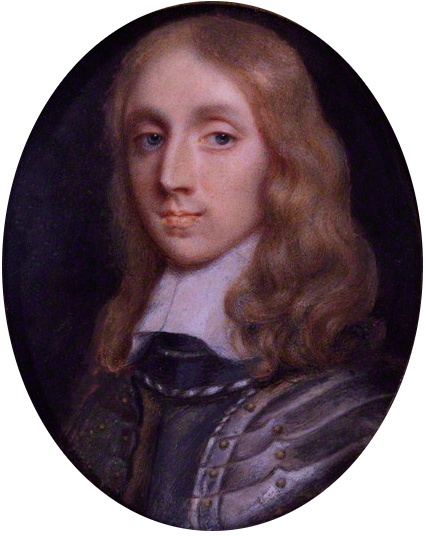
After Oliver Cromwell's death, primogeniture or not, his third son succeeded him as Lord Protector. The brief reign of Richard Cromwell exposed the weaknesses in the Protectorate, which had relied primarily on the strength of the army, rather than the consent of the governed,  to maintain itself.

Richard tried to expand the power base to the people of the Protectorate and summoned a parliament to do that in 1659. He was immediately disappointed when Republican members derided the Protectorate as tyrannical and responsible for the economic depression in the country. In the Spring of that year, ignoring Richard without actually deposing him, the assembly created a new governing body which would eventually invite Charles II to return and rule over the Commonwealth in 1660.

Richard Cromwell himself never faced any punishment. He was simply forgotten as the nation moved forward under a new monarchy. He died at the age of 85 in Hertfordshire, England.

Wednesday, March 6, 2013

The Renaissance and Humanism


The Renaissance began well before AD 1500.  Some say it’s roots go back to political, philosophical and educational changes in 12th century Europe.  Most would agree that it began to have a more noticeable effect on society after the fall of Constantinople in 1453, when many Greek scholars fled the terrible destruction of that last Christian metropolis and brought their knowledge, along with many ancient texts, to the cities in Western Europe where they found refuge.  This led to a rebirth (renaissance is a French word meaning rebirth) in the arts and sciences of the late Middle Ages.  Also rediscovered were many ancient books preserved in monasteries during the barbarian invasion of Europe after the fall of Rome in AD 476. 
            With the invention of the printing press in 1453, these old books could now be reproduced in hundreds and even thousands of copies, ensuring their survival for future generations and allowing them to be read by multitudes in the present time.  In the thousand years since the Fall of Rome books had only been preserved by the Church and they were read only by priests and very few lay people.  The number of books had been limited because they were copied out slowly, by hand, in monasteries.  As the 16th century began, a flood of books poured out of printing presses and into the hands of Europeans.
            By AD 1500, the Renaissance had also revived and revitalized art forms throughout Europe. The Church commissioned some of the greatest works of art during this time period. The Sistine Chapel in Rome was erected in 1473-1481 by famous architect Giovanni del Dolci.  Its interiors were decorated by some of the great masters of the Renaissance: Perugino, Pinturicchio, Botticelli, Ghirlandao.  Michelangelo painted the frescoes found on the ceiling for Pope Julius II (1503-1513).  He painted the fresco known as “The Last Judgement” on the west wall behind the altar for Pope Paul III (1534-1549).  Tapestries depicting events from the Gospels were designed by Raphael and woven for Pope Leo X (1513-1521). .
            Humanism was also born out of the Renaissance.  Humanism was an attitude, a belief system, that exalted man’s free will and his superiority over nature.  These are ideas that can be accepted by a Christian.  But humanism soon came to emphasize man’s personal quest for truth, as if the Truth was not already known: that God had created man and Christ had redeemed him.  Instead, humanism suggests that the truth is “out there” to be found in certain studies, or religious or emotional experiences.
            This proved to be a very dangerous new “attitude” and it would wreak havoc on the unity of Christians as it continues to do today.

Monday, March 4, 2013

The Holy Roman Empire


In AD 1500, at the dawn of the 16th century, the Holy Roman Empire was approaching the height of its power.  Tracing its origins all the way back to AD 800, when Pope Leo III crowned Charlemagne as King of the Romans, both the Empire’s power and size had fluctuated.  Usually, the Emperor ruled over much of what we call Germany and Austria, parts of France and much of northern Italy. But he found it hard to be a strong ruler because many of the dukes, counts and bishops (who were allegedly his vassals) struggled against the Emperor.  Often, too, the Pope in Rome and the Emperor had not cooperated and fought for control of Christian Europe through the centuries.
            Now, though, Emperor Maximilian had successfully overcome much of the resistance against him.  Furthermore, he had strengthened his family, the Hapsburgs, through alliances and marriages.  His son, Felipe the Handsome, became ruler of the Netherlands and married the daughter of Fernando and Isabel, King and Queen of Spain, in 1496. (These are the king and queen that sent Columbus to discover the New World).  This daughter was known as Juana La Loca, or Juana the Mad, because she developed mental problems after she grew up.  Because she could not be trusted with the government of Spain, this meant that Felipe would someday be king of Spain and also have a good chance of being elected King of the Romans, just like his father. 
            Juana gave birth to a son in 1500.  She and Felipe named him Carlos.  He was to become one of the great men of history.
            In 1506, Felipe became King of Spain after Fernando abdicated.  Sadly, he died only a month later and Fernando had to become King again because Felipe’s son, Carlos, was only six years old.  While Fernando waited for Carlos to grow up and become the King of Spain, the little boy was raised by his aunt, Margaret of Austria, and by a priest named Adrian of Utrecht, who was a member of devotio moderna, a religious group dedicated to helping regular people learn how to read.  This priest would someday become Pope Adrian VI.
            In 1515, young Carlos became ruler of the Netherlands.  A year later, his grandfather Fernando died, and Carlos was crowned as King of Spain.  Besides what we now call Spain, the King of Spain back then was also ruler of Naples, Sardinia, and Sicily.  And he was just sixteen years old!
            Three years later, Carlos’ other grandfather, Maximilian, also died.  The dukes, counts and bishops of the Holy Roman Empire quickly elected him King of the Romans and he was crowned in the city of Aachen, Germany. Since there had been four other emperors named Carlos, or Charles, before him, he became Carlos V.  In addition to all the territory he ruled as King of Spain, he was now ruler over the Holy Roman Empire as well.  As of AD 1519, he had become the single most powerful man in all of Europe.
            Carlos V would witness some of the most important moments in the history of our Western civilization.  In the same year that he became Emperor, men from his own kingdom in Spain would begin conquering Mexico, Central and South America.  He would also be emperor when the Martin Luther started the Reformation and divided Western Christianity.  During his reign King Henry VIII of England would divorce himself from his first wife and divorce his church from Rome, founding the Church of England.  And religious strife between those who held to tradition and the new Christians in France would tear that country apart.
            But, for all the strife that would afflict his reign over one of the most powerful empires in the world, Carlos V also enjoyed living at the height of the Renaissance.  He shared the world with great painters and scientists, such as Michelangelo and Leonardo Da Vinci, about whom we will hear and see more in the weeks to come.